
Does AC Maintenance Qualify for a Tax Deduction?
Share this Article >
AC maintenance can add up, especially during the summer months. From an unexpected leaks to the weather taking a toll on your unit, you may be wondering if you can deduct AC maintenance costs. While AC maintenance generally doesn’t qualify for tax credits, there may be ways to write off the expenses as a deduction.
The information provided in this blog post regarding HVAC tax deductions is for educational and informational purposes only. This content does not constitute financial, tax, or legal advice and should not be relied upon as such.

What is AC Maintenance?
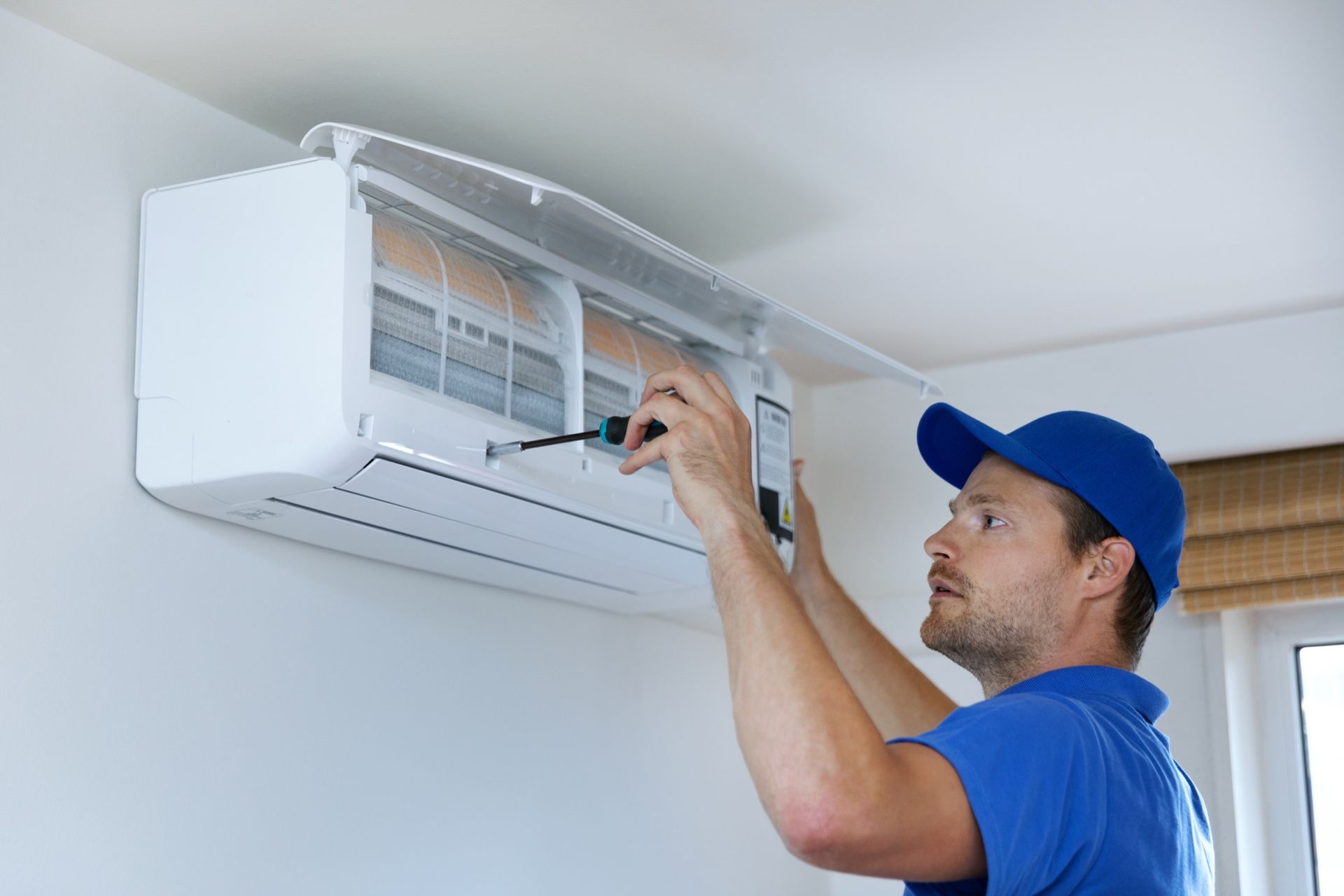
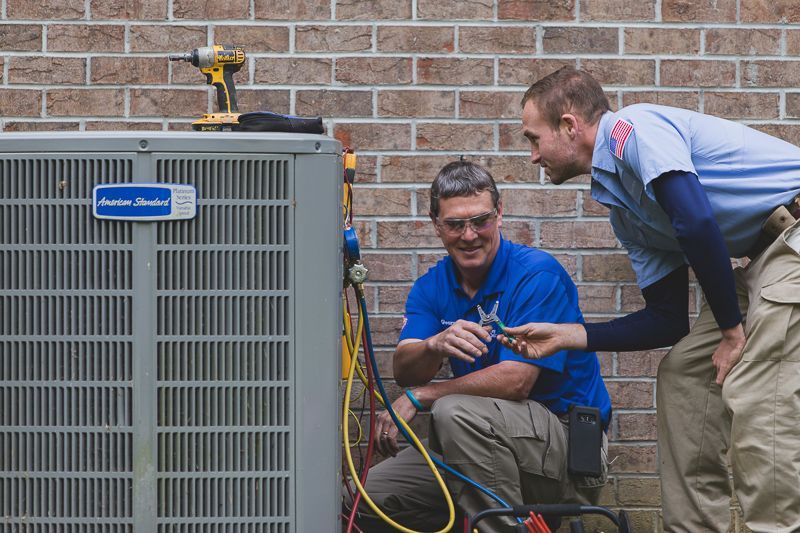
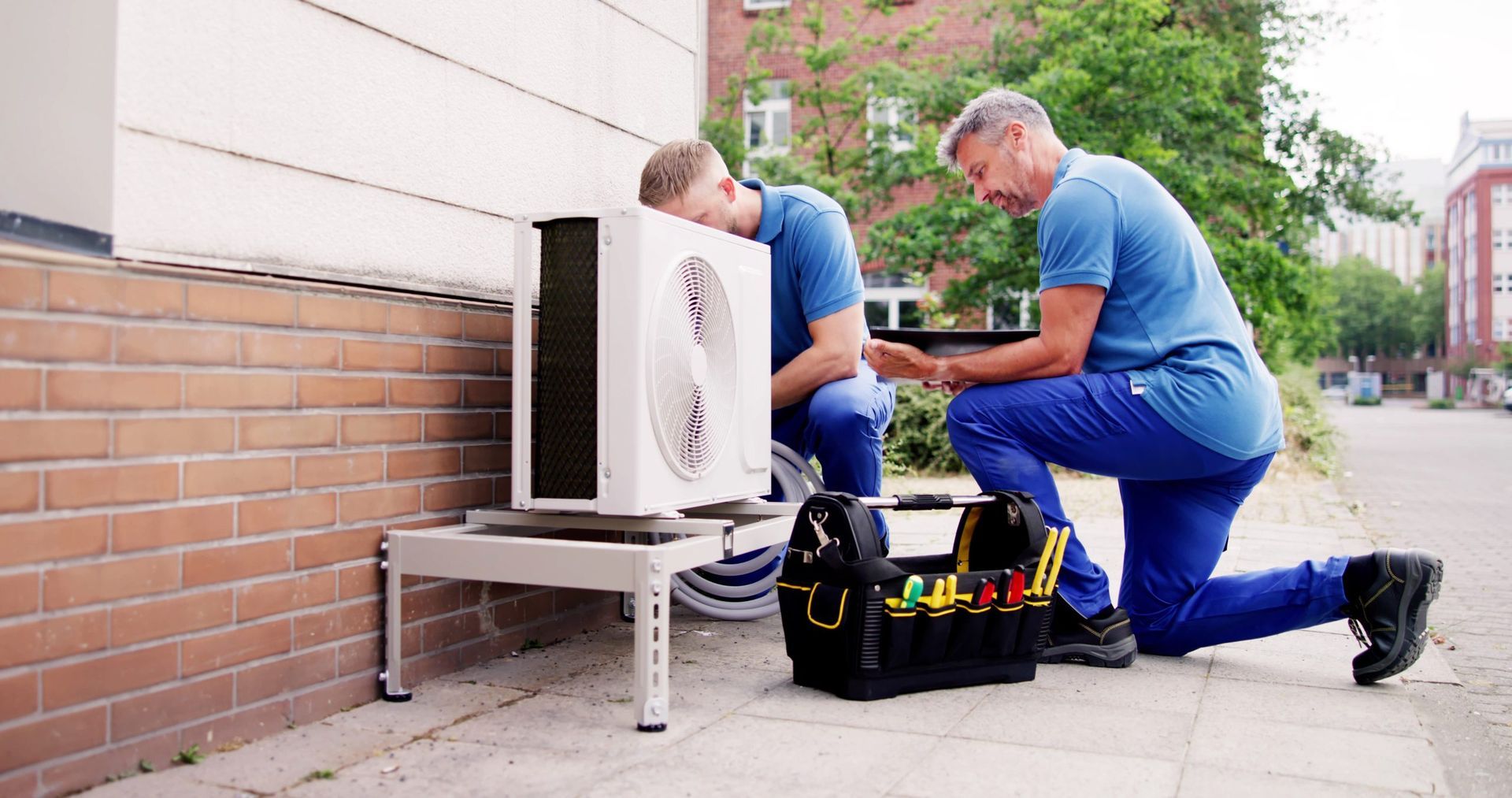
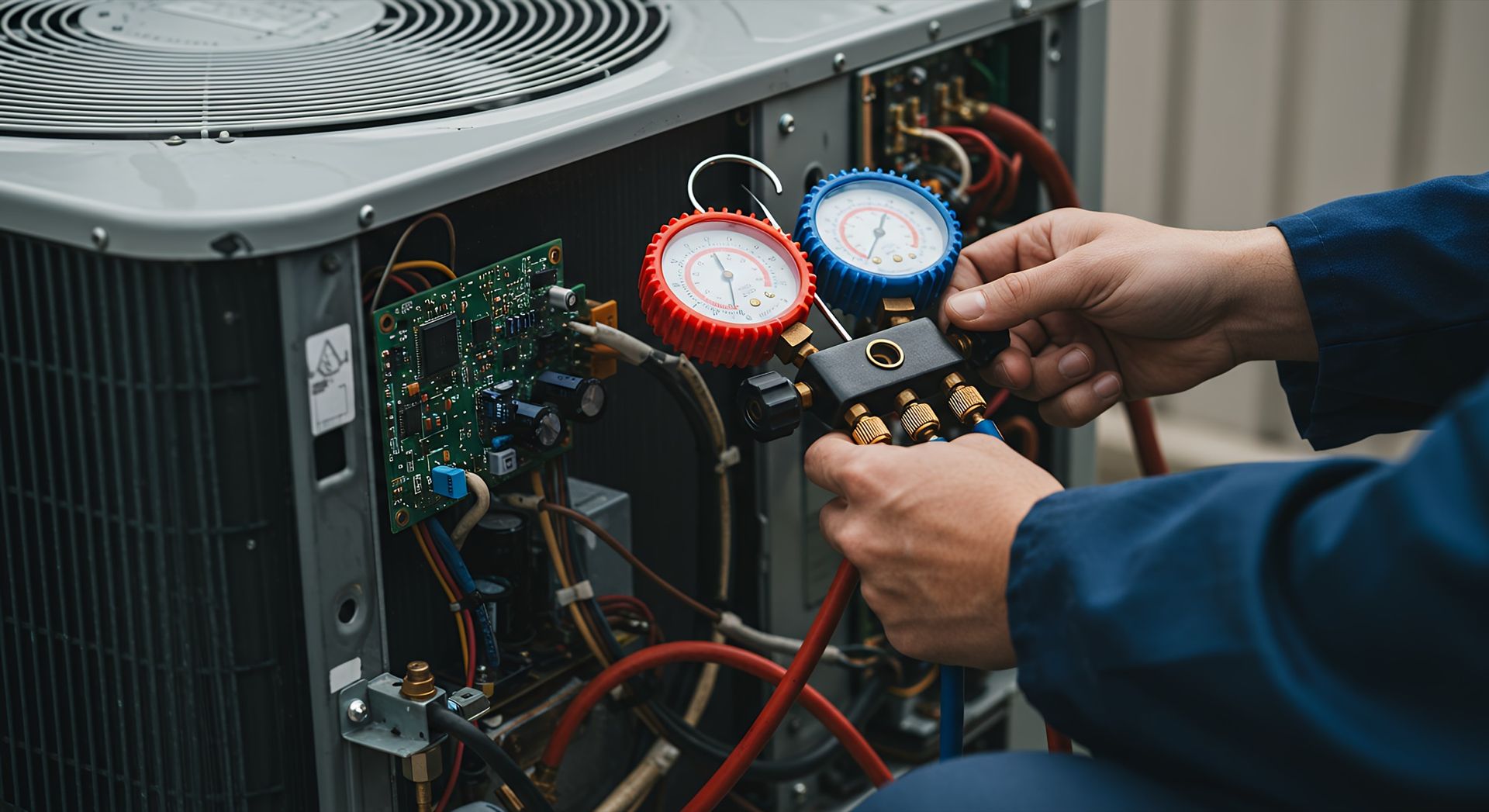
AC maintenance involves the regular inspection and cleaning of your air conditioning unit by a professional. Consistent AC maintenance can increase the longevity of your unit, provide better air quality, and reduce safety hazards. Common examples of AC maintenance include:
- Inspecting major components for damage, including the compressor, condenser coil, evaporator coil, wiring, and thermostat
- Checking refrigerant levels to ensure adequate cooling performance
- Testing electrical wires for safety
- Re-calibrating the thermostat to effectively communicate with your unit
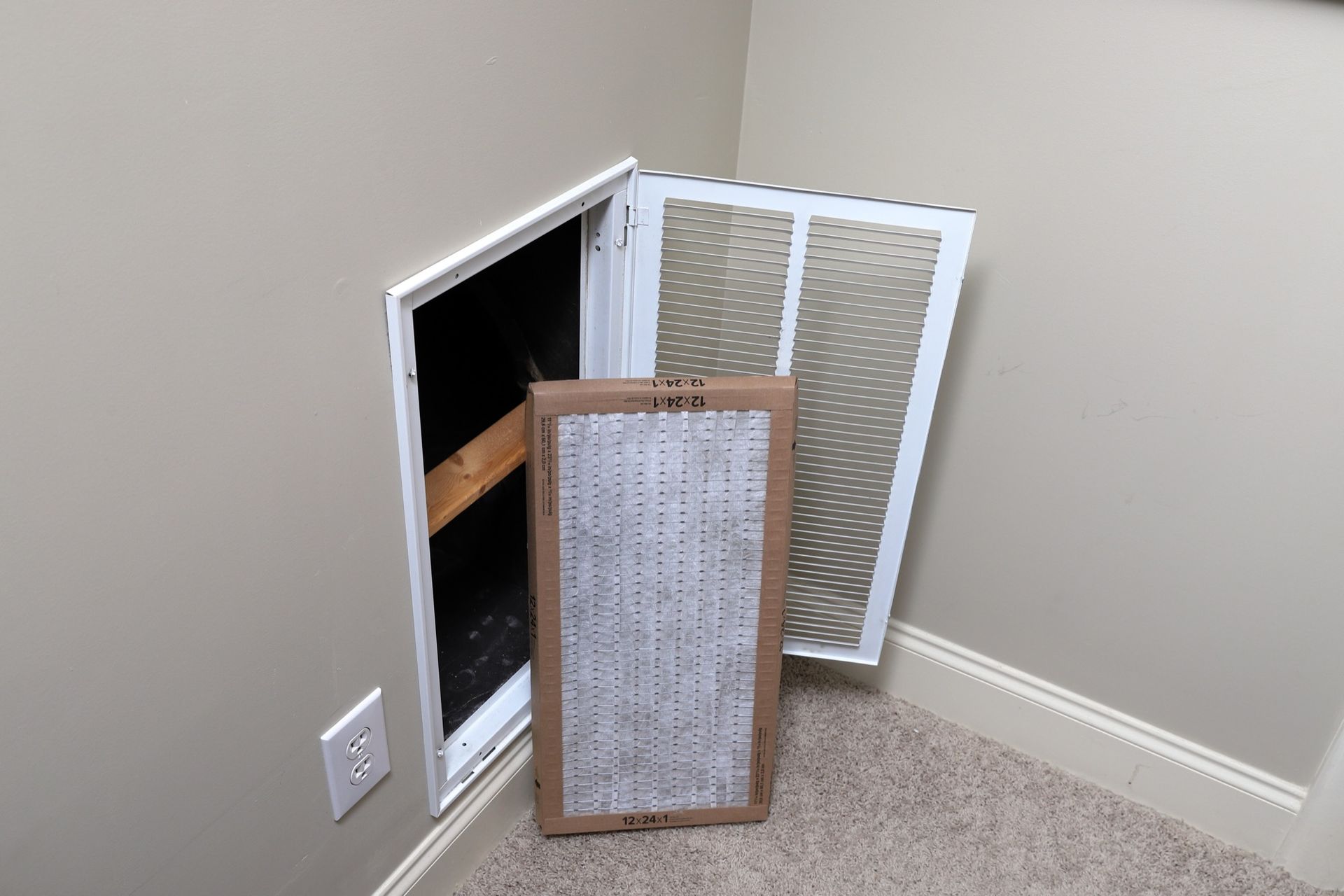
- Cleaning air filters, coils, condensate drain lines, blower fans, fan blades, and drains to prevent debris and dust from impacting performance
- Inspecting ductwork for issues that impact efficiency
- Measuring airflow for proper circulation
- Checking all safety controls to prevent environmental damage
Air conditioning maintenance can be completed annually or semi-annually if you live in a warmer climate. These costs can add up depending on the services you select. For example, a full clean and inspection would cost more compared to a quick inspection.
Does Residential AC Maintenance Qualify for a Tax Deduction?
Residential AC maintenance does not qualify for traditional tax credits, like the Energy Efficient Home Improvement Credit. This tax credit only applies to costs associated with the installation of a new unit. However, there are a few different ways that you can deduct AC maintenance costs. Let’s explore these options in more detail.
Home Office Deduction
If you run a business out of your home and claim the Home Office Deduction, you can write off a portion of your AC maintenance costs. The Home Office Deduction gives you the ability to deduct expenses related to your home. To qualify, you must have a home office. For example, if you run an Etsy shop out of a spare bedroom, you can deduct costs related to upkeep, including a portion of your mortgage, rent expense, utilities, insurance, repairs, and maintenance. The percentage you can deduct is based on the square footage of your room.
Let’s say that your home office takes up 20% of your home. Your AC maintenance costs for the year are $1,000. As a result, you may be able to deduct up to $200 through the Home Office Deduction. This deduction does have limits, including positive business income for the year. Any unused amounts can be carried forward. It is important to note that this deduction is eligible on Schedule C (business income) and Schedule E (rental income).
Accountable Plan
The Home Office Deduction only applies to your individual income tax return. This means if you have a different business entity, like an S Corporation, that conducts business out of your home, you aren’t eligible for the deduction. However, S Corporations can reimburse AC maintenance through an Accountable Plan.
An Accountable Plan has the same principles as the Home Office Deduction, reimbursing you a percentage of your qualifying costs based on the area of your home you use for business. Using our above example, let’s say your home office is 20% of your home, and you had a $1,000 AC maintenance cost. Through your Accountable Plan, you will reimburse yourself the $200. Then, the business will pick up a $200 expense.
For example, you will transfer $200 from your business checking account to your personal checking account. On your income statement, you will have a $200 deduction for maintenance. Accountable Plan reimbursements need documentation, like a detailed listing of how you calculated the reimbursement. Without proper documentation, the reimbursement might become taxable. Additionally, reimbursements should be made within a reasonable timeframe, like 90 days from when the expense was paid.


Real Estate Properties
If you are a real estate investor who holds residential properties, you have a few different options for deducting AC maintenance. First, if the maintenance costs are for your personal home, you can use the Home Office Deduction or an Accountable Plan. However, if the deductions relate to one of your properties that generates income, you can deduct the entire expense.
Let’s say that you have a residential property that you rent out. During the year, you had a $500 AC maintenance cost. Since the rental property is generating income, you can deduct the entire $500 as a business expense. AC maintenance costs related to an income-generating property, like a rental, can be claimed regardless of where you report the transactions. For example, the $500 deduction will apply if you report rental transactions on Schedule E of your individual income tax return or on a separate business tax return.
Does Commercial AC Maintenance Qualify for a Tax Deduction?
The deductibility of commercial AC maintenance is different than residential. Most commercial buildings are operated by businesses. This means deductions operate similarly to residential real estate properties. Owners of commercial buildings that pay for AC maintenance can deduct the entire cost. Let’s say that your AC maintenance costs total $5,000 during the year. You would be eligible for a $5,000 deduction.
However, there are deduction limits for reimbursements. Let’s say that you rent out a commercial building. You pay a $2,000 maintenance invoice and then ask for reimbursement from the tenant. If the tenant reimburses you, you are not able to take the deduction. Instead, the tenant would get the deduction since they paid the invoice.

What Information is Needed to Deduct AC Maintenance?
Documentation is important when claiming AC maintenance deductions, regardless of whether the cost relates to commercial or residential property. In the event of an IRS audit or inquiry, the agent will request substantiation for your expense. A bank or credit card statement showing the transaction isn’t enough. Instead, you need an invoice, receipt, or other document that outlines the service performed and the associated cost.
Let’s say that you paid $750 for an annual inspection and cleaning. You have a qualifying home office. You should provide your accountant with a copy of the invoice and proof of payment. This documentation should be kept with your tax records for at least three years. Make sure your invoice contains the date of service, the company’s information, and the cost of each service performed.
Summary
Before you throw away your AC maintenance invoices, check to see if you can claim a deduction on your tax return. Even though you might not get to claim the full amount as a deduction, writing off a percentage can help you lower your taxable income and provide your AC unit with the necessary maintenance. For more information about what kind of maintenance your AC unit needs, reach out to one of our team members.

Share this Article >
Need help?
Our AC Services